
In many African markets, small-capacity motorcycles are more than vehicles — they are essential tools for daily transport, commerce, and income generation. Standard motorcycles (100–200 CC) dominate sales and usage because they balance cost, fuel efficiency, and ease of maintenance, making them ideal for taxi services, delivery, and personal transport.
Distributors often carry products like brake pads for common models such as the Honda CG125, Bajaj Boxer, and TVS bikes. Yet even within these familiar segments, finding the right assortment strategy — products that sell well and meet local usage conditions — can be tricky. Below, we break down how experienced distributors curate a best-seller brake pad range that works in real African conditions.
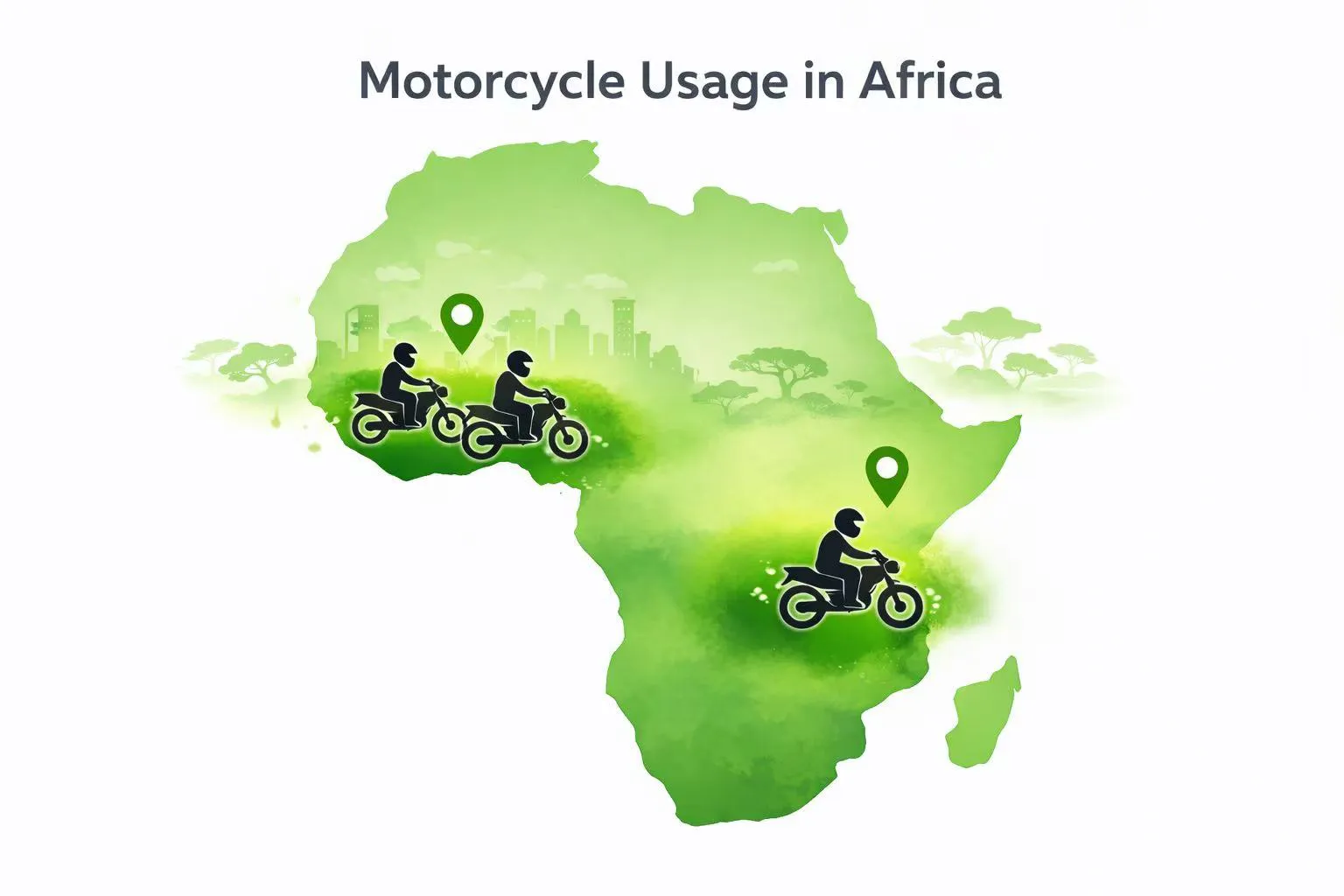
Market Size & Growth
The African two-wheeler market is robust and growing. In 2025, its value is estimated at over USD 9.1 billion, driven by urban mobility needs and limited public transport options.
This means high volume and repeated demand for consumables like brake pads. However:
• Nigeria, Kenya, Ghana, Tanzania — heavy usage hubs
• Daily high-stop traffic + rough roads stress braking systems
• Riders often prioritise durability and cost-efficiency
This is where a smart assortment helps distributors match product offerings to real usage patterns.⸻
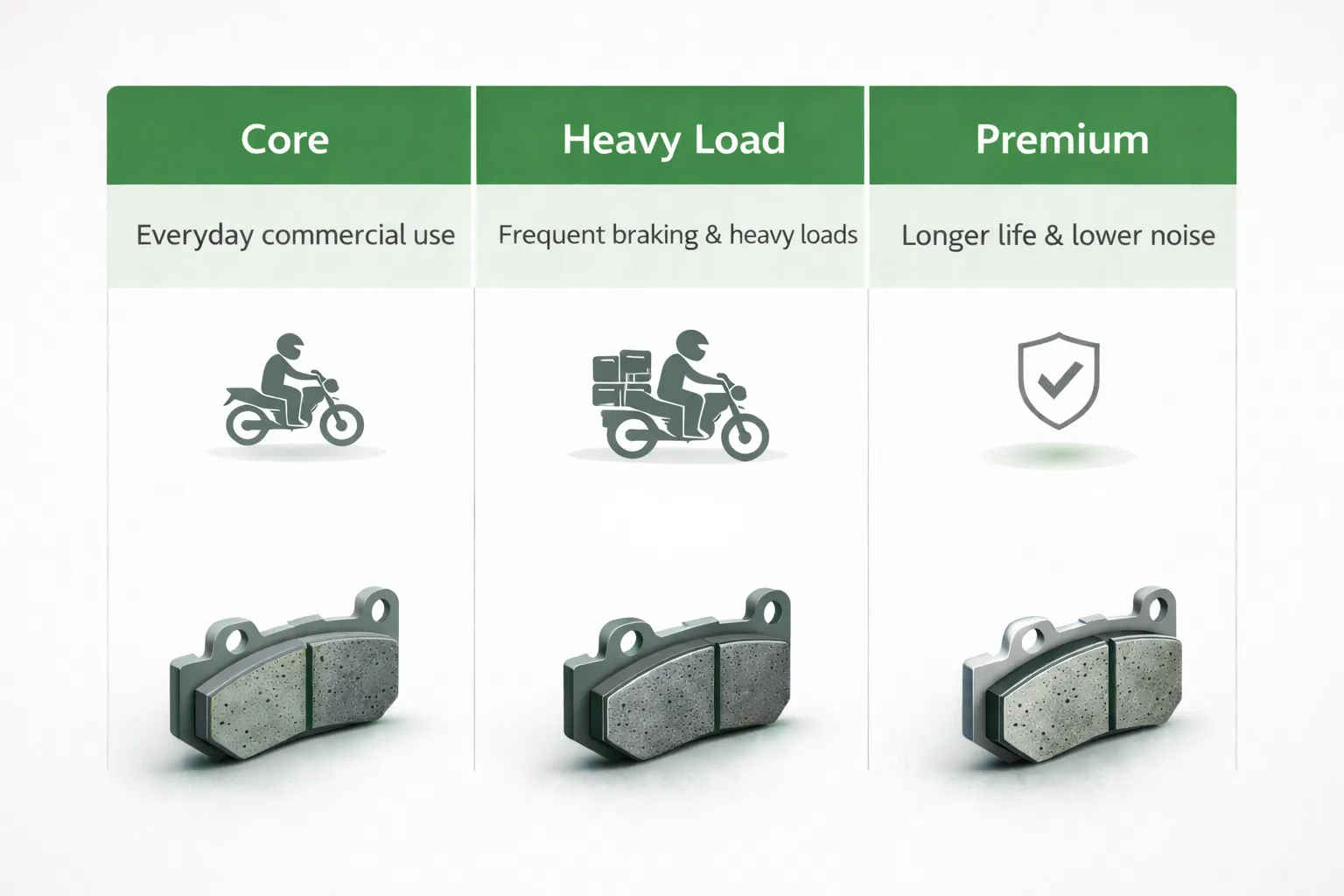
Instead of stocking every SKU under the sun, leading distributors segment brake pads into a few intuitive groups:
A. Core Everyday Use
For most fleet riders and taxi operators
• Balanced performance
• Affordable, durable materials
• Lower noise levels
• Longer life under mixed road conditions
These become the baseline fast sellers.
B. Heavy Load / High-Distance
For frequent delivery or business use
• Materials that resist fade under heat
• Slightly firmer compounds
• Better wear characteristics
C. Premium / Specialty Options
For customers willing to pay more
• Ceramic or semi-metallic blends
• Lower dust / noise
• Longer service intervals
This tiering lets distributors serve different customer segments efficiently without overstocking.
These models are among Africa’s workhorses:
• CG125 — simple, rugged, easy to service
• Bajaj Boxer — very popular in East and West Africa due to fuel efficiency and robustness
• TVS models — common due to competitive pricing and parts availability
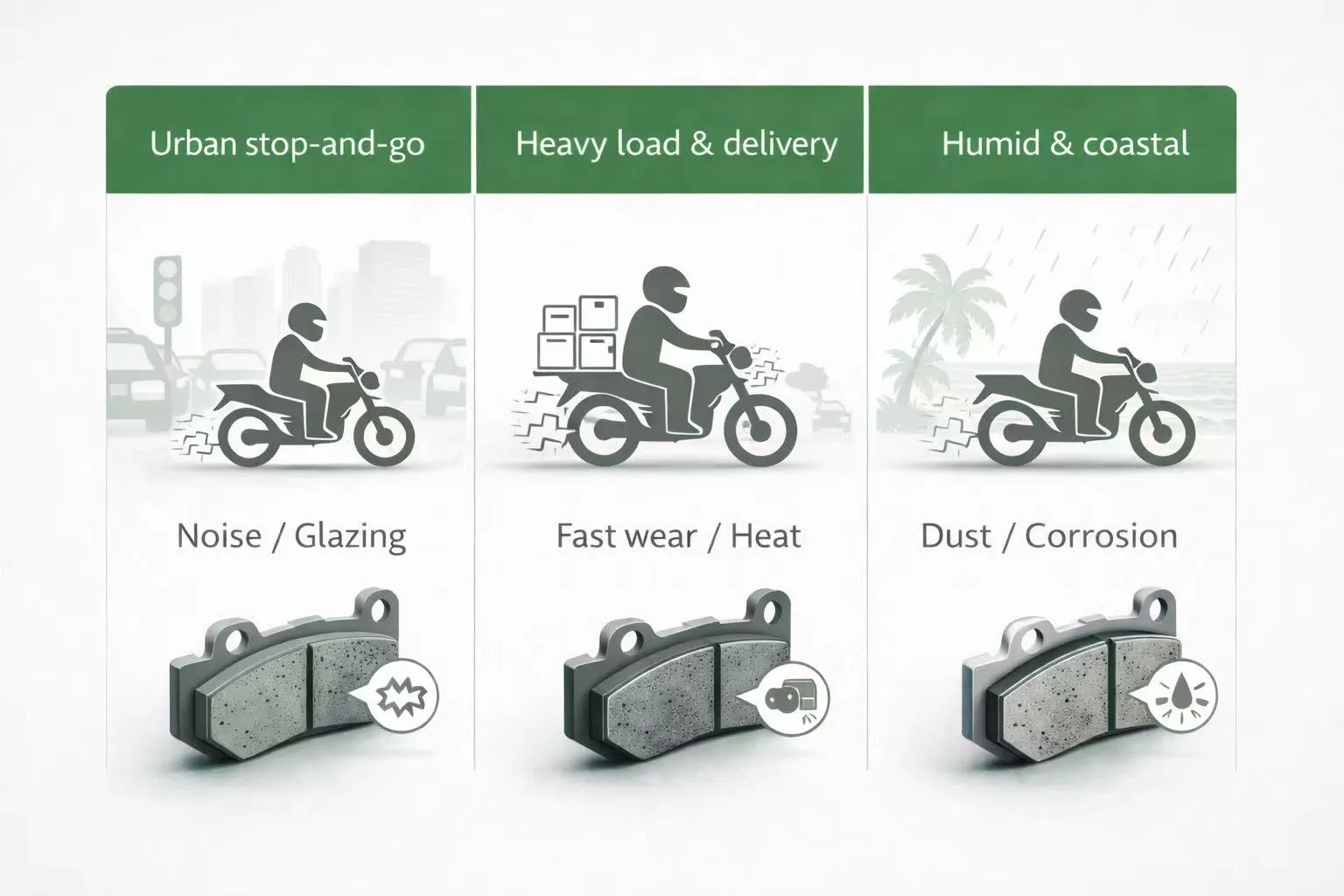
Because these models are so widely used, even a small shift in product quality can greatly impact returns and repurchase rates. Skilled distributors track performance:
• Complaints about noise or glaze often mean the material compound isn’t suited
• Short pad life often reflects aggressive riding conditions
• High dust / corrosion in coastal/humid regions demands different compounds
Instead of listing exact prices (which vary across regions and times), it helps to think in relative tiers:
• Entry Tier — lowest price, reliable
• Mid Tier — better compound, fewer complaints
• Premium Tier — longest life / better performance
Observation: Many riders shift from Entry to Mid Tier over time once they see wear patterns — meaning Mid Tier often ends up being fastest selling.
Nigeria
• Largest market share in Africa (~28%)
• High volume import and formal distribution
• Urban density means frequent braking cycles — think Lagos and Abuja traffic
Focus assortment on high-wear compounds for these conditions.
Kenya
• High adoption of Bajaj bikes; Boxer is a common choice
• Roads are a mix of paved and rougher segments
A good mix of Core + Heavy Load tiers works well.
Ghana & East Africa
• Delivery services and informal commercial fleets use similar bikes
• Cost sensitivity is high
Lean toward value-performance compounds that balance wear and price.
Experienced distributors know that how you present brake pads can influence sales:
• Clear model compatibility charts
• Photo-forward packaging showing fitment
• QR code with install or maintenance guide
This reduces customer confusion and returns, especially when retail partners are non-technical.
Building a best-seller brake pad assortment in Africa is less about guessing and more about understanding use patterns, materials, pricing tiers, and local conditions.
Good distributors don’t just “sell parts.” They help buyers choose the right combination — from everyday pads for commercial fleets to premium options for riders who demand a bit more life and performance.
This approach reduces returns, improves reputation, and builds repeat business — which is what long-term success looks like in African motorcycle parts distribution.