
In many African markets, brake pad selection is often reduced to a simple question: ceramic or semi-metallic?
On paper, ceramic pads are seen as “more advanced,” while semi-metallic pads are considered “more basic.” In reality, hot temperatures, humidity, road conditions, and riding habits play a much bigger role than the material name itself.
For distributors supplying brake pads across West, East, and Central Africa, misunderstanding this difference is a common reason for noise complaints, fast wear, and unexpected returns. This article focuses on how both materials perform in real African conditions, not in test labs.

Brake pads do not work in isolation. In African markets, they are exposed daily to:
• High ambient temperatures
• Stop-and-go traffic in crowded cities
• Seasonal rain and humidity
• Inconsistent maintenance habits
These factors directly affect brake temperature, surface glazing, noise behavior, and wear patterns. As a result, a material that performs well in dry or moderate climates may behave very differently in tropical or coastal regions.
This is why distributors often hear conflicting feedback about the same brake pad model across different countries or even different cities.
Ceramic brake pads are often marketed as a premium option. In African markets, they show clear strengths, but also limitations that are frequently overlooked.
Where ceramic pads perform well
• Lower brake dust in normal riding
• More stable braking feel at moderate temperatures
• Quieter operation when properly matched to riding style
These advantages make ceramic pads suitable for light to moderate urban use, especially where riders prioritize comfort and cleanliness.
Common issues in hot & humid conditions
• In heavy traffic, ceramic pads may glaze faster
• Noise complaints can increase once glazing occurs
• Performance drops when pads are not given time to cool
In cities with dense traffic and constant braking, ceramic pads can feel “smooth at first, noisy later,” which is a common complaint distributors hear.
Semi-metallic pads are sometimes viewed as a lower-tier option, but in many African use cases, they are more forgiving.
Key advantages
• Better heat dissipation under frequent braking
• More consistent performance with heavy loads
• Less sensitive to uneven maintenance habits
For commercial riders, delivery bikes, and motorcycle taxis, semi-metallic pads often deliver more predictable results over time.
Trade-offs to understand
• Slightly higher brake dust
• Potentially more disc wear if material quality is inconsistent
When sourced correctly, semi-metallic pads often result in fewer returns and fewer noise-related complaints, especially in high-use markets.
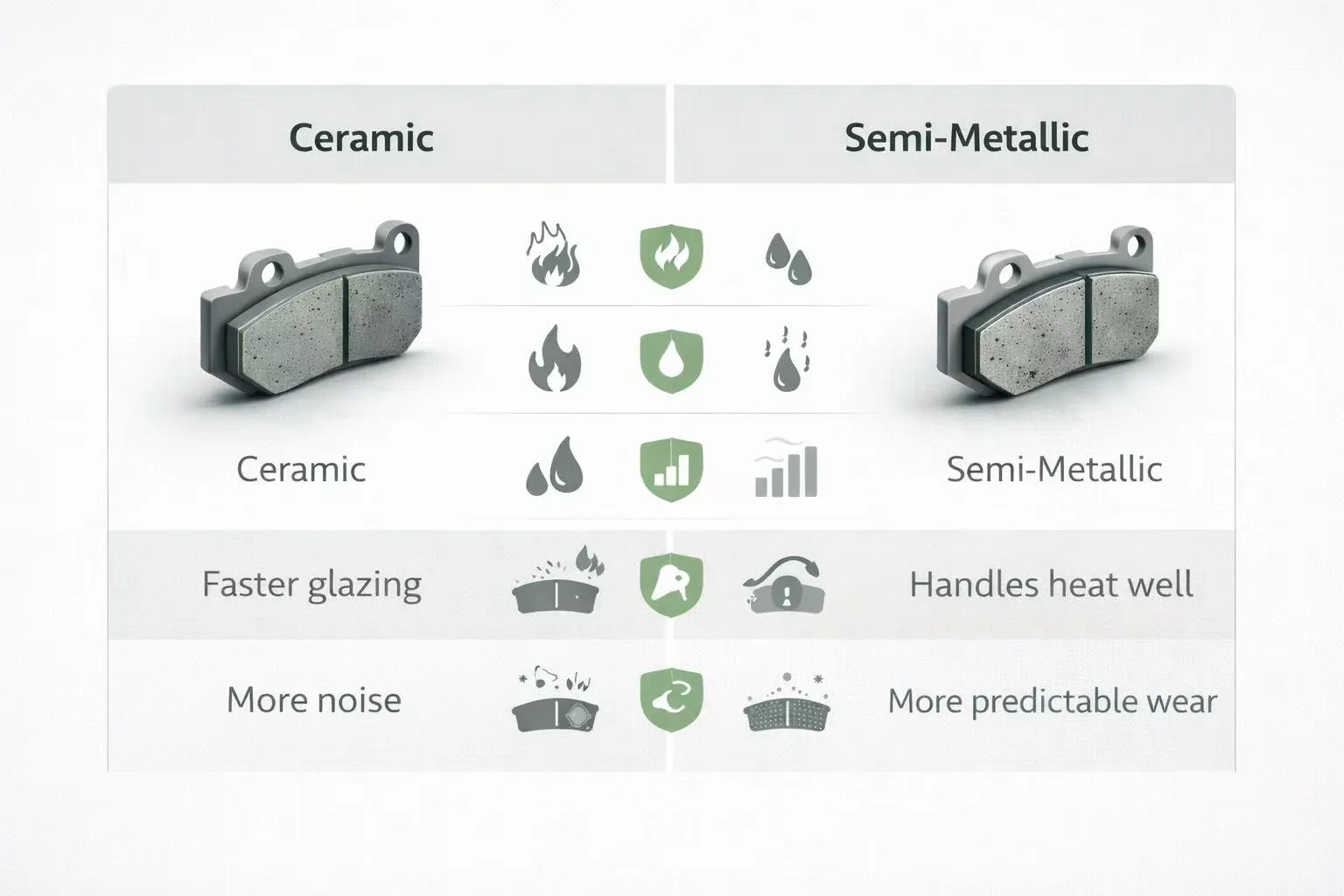
In coastal regions, humidity and corrosion play a bigger role. Pads that absorb moisture or glaze easily tend to cause squealing and inconsistent bite. Inland markets, on the other hand, face more dust and heat accumulation.
This is why experienced distributors avoid treating “Africa” as a single condition. Instead, they adjust material choices based on:
• Riding intensity
• Climate exposure
• Customer usage patterns
The goal is not to push one material as “better,” but to match material behavior to actual use.
Across African markets, three mistakes appear again and again:
1. Assuming ceramic pads are always premium and problem-free
2. Ignoring heat build-up in high-frequency braking environments
3. Mixing materials without understanding customer usage
Avoiding these mistakes reduces complaints far more effectively than switching brands or changing packaging.
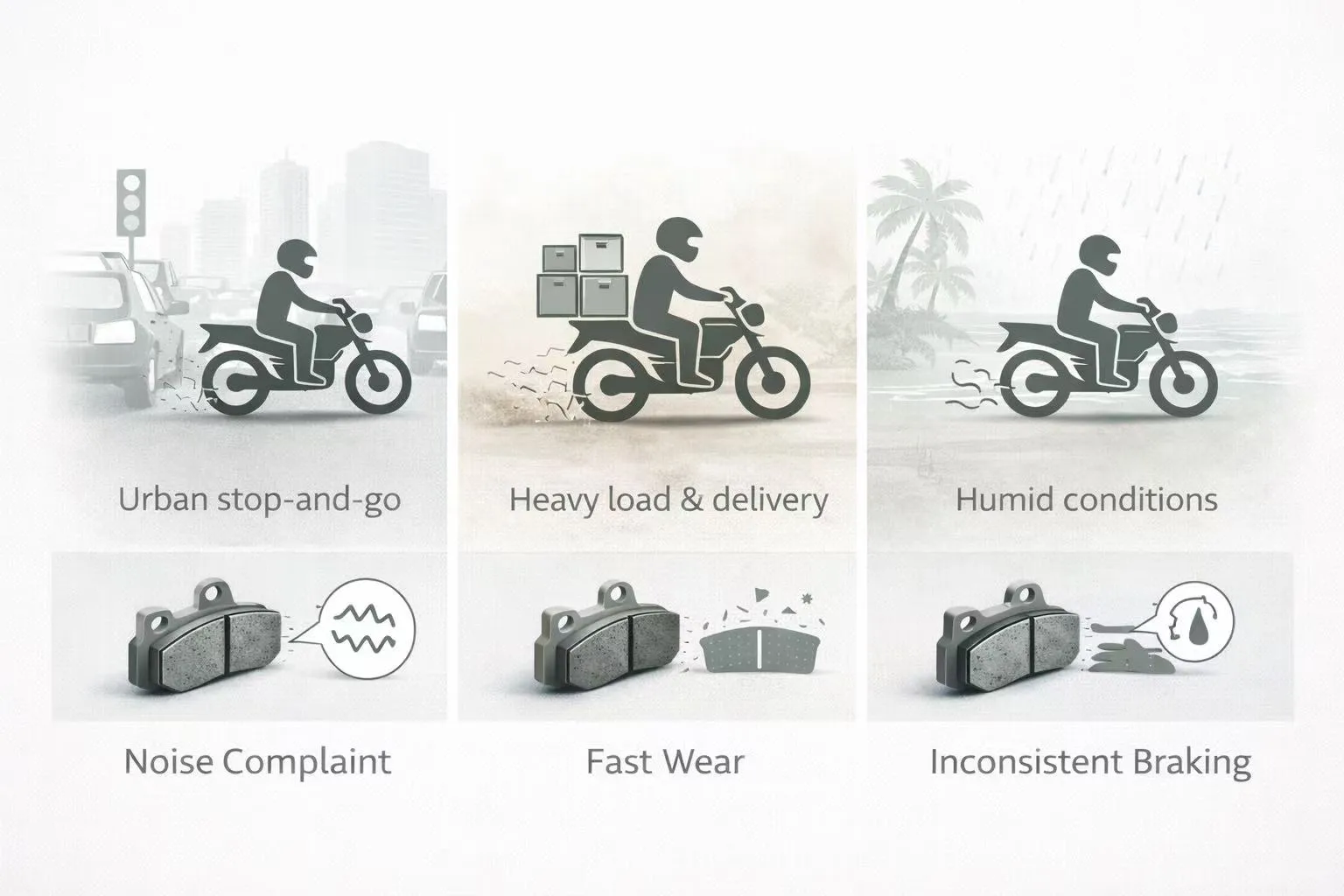
In hot and humid African markets, brake pad performance depends less on marketing labels and more on how materials respond to real riding conditions. Ceramic and semi-metallic pads each have their place, but only when selected with temperature, load, and maintenance realities in mind.
Distributors who understand these differences are better positioned to reduce returns, manage customer expectations, and build long-term trust in their product range.